
The quiet repeat category
Ask a buyer what sells in bamboo and the answer is usually cutlery or plates. Ask what reorders quietly for years and the answer is often organizers. They extend a line without stretching its story: the same warm tone, the same panel construction as trays and boards, and a clear place to live in the customer's kitchen. The search demand also clusters tightly around drawer organization, so whether a shopper types organizer, drawer organizer or tray, the product behind the words is the same laminated panel, and the program behind the words is the same spec discipline.
Three types cover the category, and they differ more in where they live than in how they are made.
| Type | Typical construction | Program note |
|---|---|---|
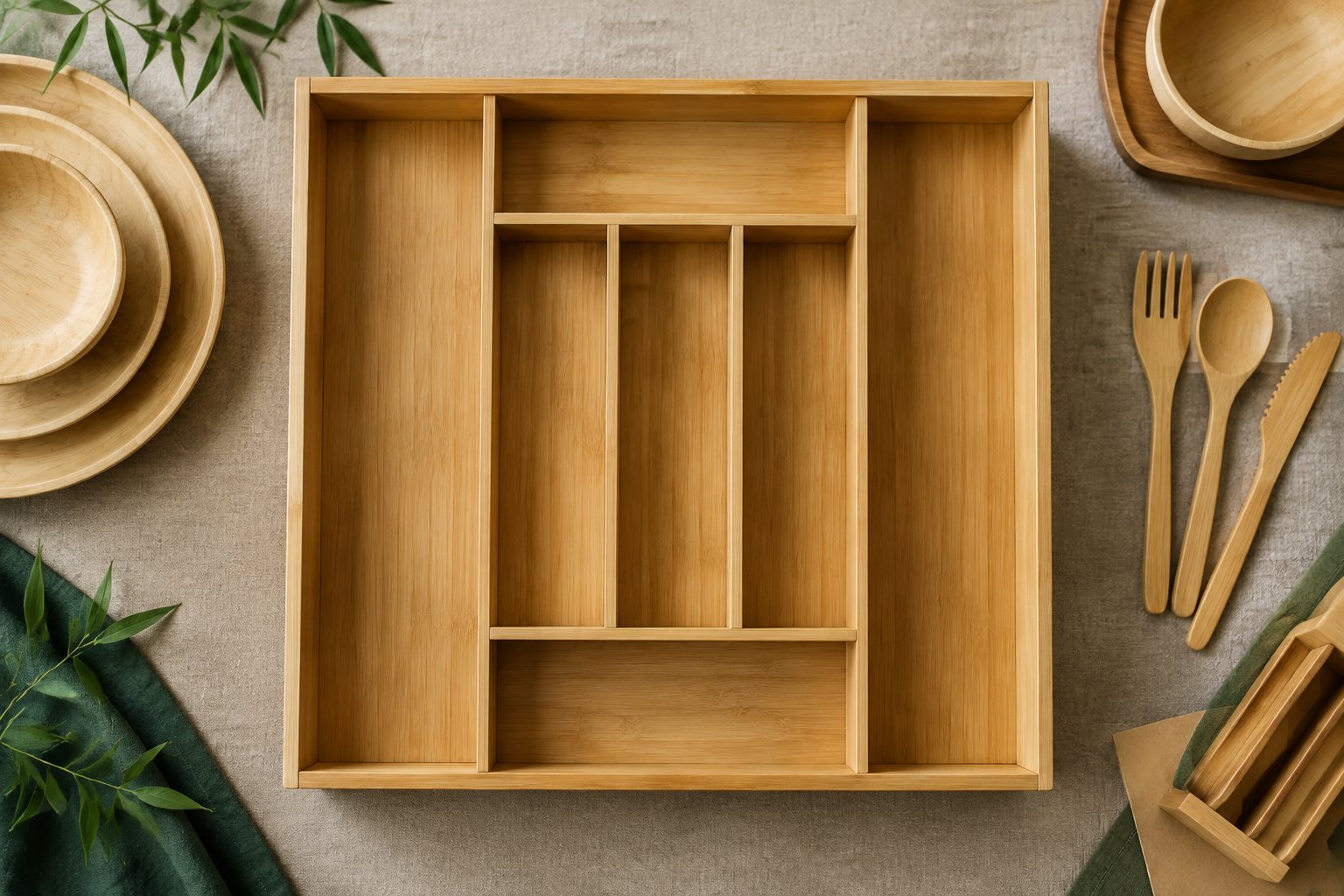
| Flatware drawer tray | Laminated panel with formed compartments | Compartment layout and footprint are spec-sheet items |
| Countertop crock | Shaped whole bamboo or panel-built holder | Utensil storage beside the stove; weight matters |
| Lid and pantry organizer | Panel dividers with slots | Extends the line beyond flatware into cabinets |
Drawer trays and the fit question
The most important fact about a drawer organizer is the drawer. Interior width, depth and how far the drawer slides out decide whether a tray feels like it was made for that kitchen or squeezed into it. Sizes run as common options, confirmed on the spec sheet per program, and the work splits in two: the workshop publishes the exact footprint, and the retailer publishes it just as exactly on the product page. Organizers returned over fit are the most preventable loss in the category, and the fix costs one line of copy.
Compartment layout follows the same logic: it is a spec-sheet item, matched to how the market you sell into stores flatware, rather than a universal grid. Programs that put a real drawing in the brief get trays that fit real drawers; programs that write bamboo drawer organizer on an email get a guess. The full tour of the category, drawer to countertop, is in the buyer note on bamboo organizers and trays.
Countertop crocks and lid organizers
Crocks hold utensils where cooking happens, which makes them part of the cooking story rather than the storage story: heavier base, taller walls, a finish that shrugs off splash and wiping. Lid and pantry organizers carry the panel logic into cabinets, with slots for pot lids or dividers for deep drawers. Both share the drawer tray's construction and its spec discipline, and both sell to the same shopper who bought the tray, which is the commercial logic of extending a line here: one customer, three panels.
Construction notes that decide quality
Panel thickness sets the feel; compartment dividers and edges are sanded so nothing snags a knife or a hand; bottoms stay flat so the tray sits square in the drawer. Weight is a feature here rather than a cost problem, because heft reads as value at low material volume. As with all laminated pieces, the adhesive system is named on the spec sheet, and the finish is named with it, since organizers live beside food-adjacent surfaces even when they rarely touch food directly.
Retail merchandising: organizers as the entry ticket
In a boutique, organizers do quiet work: a flat tray displays well, carries an approachable first price, and introduces the brand's tone to shoppers who came for something else. In gifting seasons, a tray paired with a cutlery set reads as one complete idea, set up the drawer, and the pairing lifts both pieces. Online, organizers earn their keep on search and on the second visit: a customer who liked the plates comes back for the drawer. Programs that plan the merchandising alongside the spec avoid the fate of organizers ordered as an afterthought and priced as one.
Online, the product page does the work a shelf would: the footprint diagram, a drawer-opened lifestyle shot and an honest care line, all in the first screen. Buyers skim dimensions on this category more than on any other durable piece, and pages that bury them pay for it in returns and reviews. The photographs should show the tray with flatware in it, because the mind measures capacity better than it measures millimeters.
Branding and private label
Organizers take branding the same way the rest of the durable line does: laser engraving on edges or faces for a mark that lasts, printed bands and sleeves for retail presentation. Because the surfaces are flat and generous, engraving shows well, and the packaging print is quoted together with the piece so the look lands as one design. Artwork and print methods follow the guidelines on the private label page, and the same file that drives the engraving should drive the sleeve, which keeps samples and shipments honest.
Tone matching with the rest of the line
Organizers sit next to boards and trays in the same drawers, so tone consistency across a program matters more here than almost anywhere else. When the desk adds organizers to an existing dinnerware or serveware line, we sample against the pieces the customer already carries, matching panel tone and finish rather than starting fresh. It is a small ask at the sampling stage and an expensive one to retrofit after the shelf is set.
Why a tableware desk quotes organizers
Because the panels come off the same pressing lines as trays and boards, and the spec discipline is identical: adhesive system named, finish named, moisture and crack checks before packing. A program that adds organizers to an existing dinnerware or serveware line usually rides the same workshop relationship, which shortens sampling and keeps tones matched across the shelf. Durable styles typically run 500-1,000 pieces per style as a reference range, confirmed in writing on the MOQ and lead time page. When the tray sizes and compartments are decided, send the brief to the desk with the drawer dimensions you are selling into; the reply will confirm the fit options and the sampling plan in writing.