
What private label means at this desk
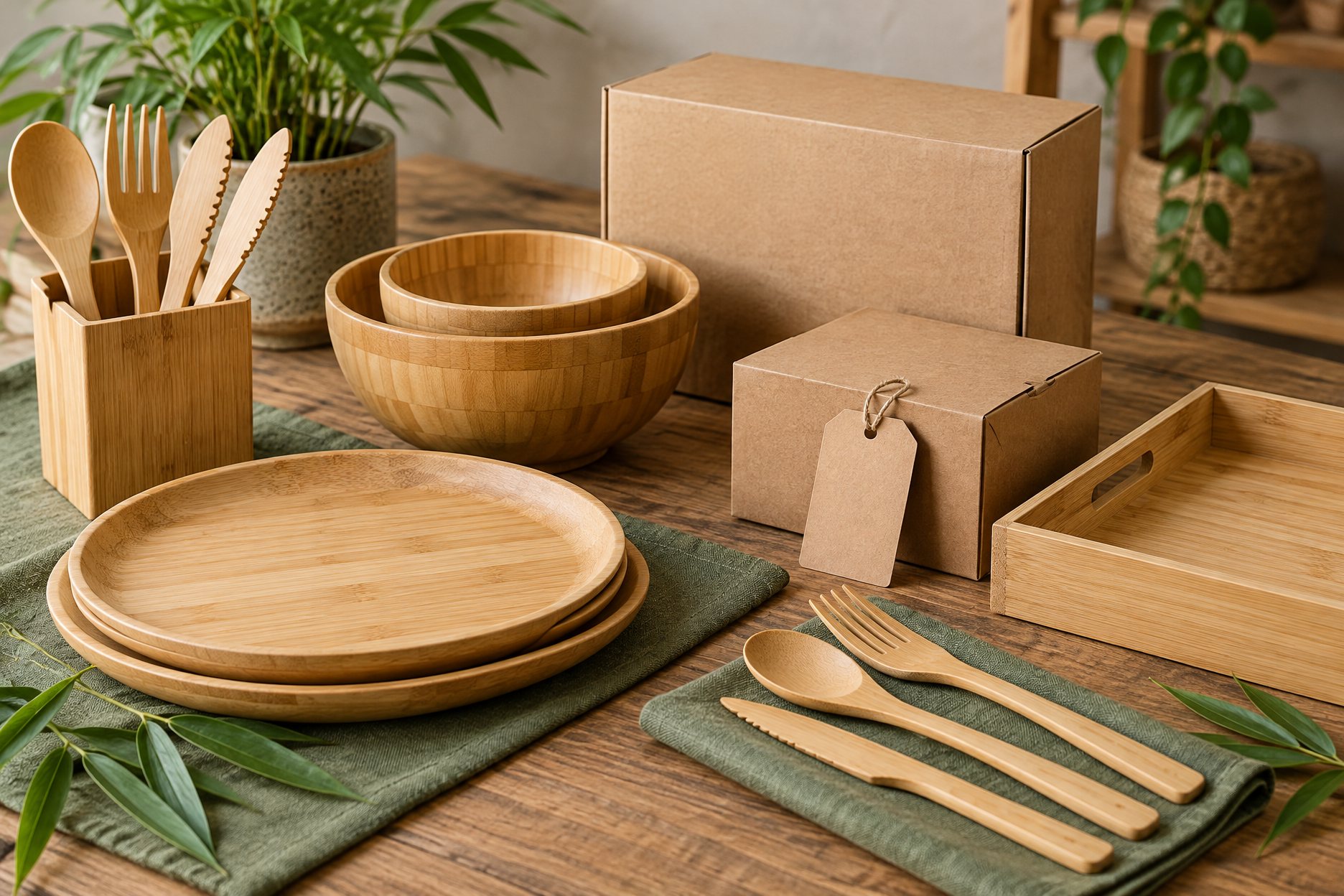
Private label bamboo products are stock or custom items carrying your brand instead of none. In practice the work splits into two layers. The object layer: a laser-engraved mark on cutlery handles, boards or organizers, or a silkscreen print on flat panels. The packaging layer: printed sleeves and boxes, hang tags, care cards, insert cards. Buyers sometimes assume the object layer is the whole job; in retail, the packaging layer usually carries more of the brand, and it is also where claims live, which makes it the layer with paperwork attached. The two layers interact more than buyers expect: an engraved handle wants a sleeve with a window or an open box so the mark shows; a printed sleeve with a strong claim wants the certificate file behind it before the printer sees artwork. Planning the layers together is most of what a private label brief is.
The branding methods, and where each fits
| Method | Best suited to | Notes for buyers |
|---|---|---|
| Laser engraving | Cutlery handles, boards, crocks, pouch hardware | Permanent, natural-tone mark; proof fixes position and depth |
| Silkscreen printing | Flat laminated panels, trays, larger plates | Higher contrast than engraving; ink system named on spec |
| Printed sleeves and boxes | Retail sets, gift programs, corporate gifting | Carries claims and care story; print lead time applies |
| Hang tags | Individual items, price and story attachment | Strings or pins; artwork proof before bulk |
| Care cards | All durable ware | Must match the program spec, not generic advice |
The printing and branding guide goes deeper on method choice per item, including what each method does to the surface and to lead time.
Claims need program documents
The branding layer is where compliance questions arrive, because the box is where words get printed. A compostable claim on a disposable kit needs the certificate reference behind it, verified on the scheme's lookup and written into the program file. Eco language on a retail box must satisfy the FTC Green Guides' expectation of qualification and substantiation. A kids' set with a branded hang tag carries CPSIA duties, including tracking labels. Finishes and adhesives show up in Proposition 65 assessments. None of this forbids a branded program; it sequences it. Claims are chosen with the program documents in hand, then the artwork is drawn, so the box never promises something the file cannot show. A useful format is a claims table: each intended statement in one column, the document that substantiates it in the other, and nothing printed that lacks a row. Brands that keep this table as a living file find reprints and line extensions nearly automatic, because the substantiation work was done once and honestly. The compliance page maps claims to papers, and we will not print a claim the file does not support.
The flow from artwork to golden sample
- Brief and claims list. Items, branding methods, the exact claims the packaging must make, and the quantity plan.
- Artwork and dielines. Your files or our templates; print-ready artwork for sleeves, boxes, tags and cards.
- Proofs. Engraving proofs positioned on physical items; print proofs for packaging; approval in writing.
- Golden sample. The fully branded sample fixed as the bulk reference, object and packaging together.
- Bulk and inspection. Production against the golden sample; inspection covers branding fidelity, not just product.
Custom work sits above stock on the reference MOQ because each step carries setup: engraving programming, screen preparation, print plates. Figures are confirmed per program in writing on the MOQ and lead time page, and custom sample rounds sit inside the 7 to 15 working-day reference window per round.
Buyers supplying their own artwork should expect one proof round minimum; two is normal when a dieline is new.
Artwork practicalities, worth an hour up front
Branding on bamboo and bamboo-tone packaging has its own small craft. Engraving reads as tone-on-tone: marks show as darker burned lines rather than ink color, so fine detail and small type need proofing on the actual material, not on screen. Silkscreen contrast depends on the panel tone beneath the ink, which is why proofs run on production panels rather than paper. Print packaging needs dielines that match the actual carton folds, and artwork supplied as vector files with fonts outlined avoids the most common proofing delay. Cardstock items, hang tags and care cards, should be proofed in the same light the shelf will use, because a care card unreadable under warm retail lighting is a care card unreadable. An hour on these practicalities before artwork is drawn usually saves a full sample round, and sample rounds, not tooling, are where branding schedules quietly stretch.
Where private label programs start
Most branded programs start from stock shapes with a mark and packaging, because the tooling exists and the calendar stays short. A cutlery set with an engraved handle and a printed sleeve is the classic first program for an eco brand; the cutlery sets guide and the travel cutlery guide show the pouch formats that carry marks well. Corporate gift buyers usually start with boards or organizer sets in a printed box, where the engraving area is generous. Fully custom shapes are quotable and sometimes worth it, but they add tooling and sample rounds, and the honest advice is to earn your way there: launch on stock-plus-branding, learn what your customers actually reach for, then customize the proven item. The private label guide covers this sequencing with examples.
If you have artwork ready, or claims you know the packaging must carry, send the brief with both. The reply names the methods that fit, the papers each claim needs, and the proof schedule in writing.