
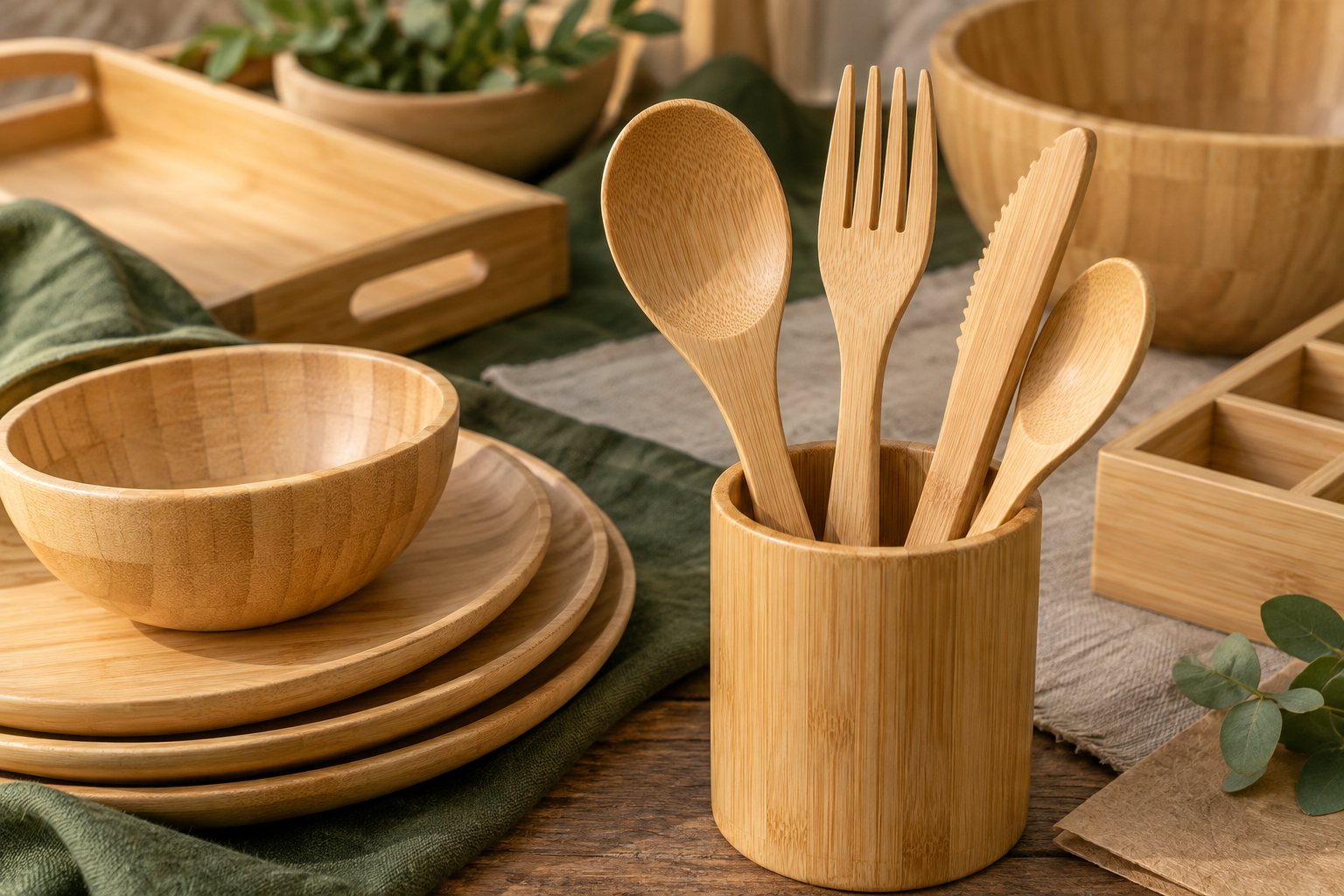
What the desk actually quotes when you say bamboo cutlery
Most buyers arrive with a picture: a three-piece set, matte tan, a small logo on the handle. The picture is easy. What decides whether the program works is underneath it: which construction the pieces are shaped from, what finish touches food, how the brand mark is applied, and what the pack looks like on a retail shelf or in a hotel drawer. This page walks those decisions the way we raise them with partner workshops before a quotation is written.
One route note first. Reusable bamboo cutlery is the durable route: pieces designed to be washed and used for months or years. If your program is single-use cutlery for takeout, events or foodservice case packs, that is a different construction with different papers, covered on the disposable bamboo cutlery page. Mixing the two up is the most common first brief we correct, and the difference shows up in weight, finish and care expectations.
The four shapes and where each earns its place
Reusable bamboo cutlery is shaped from moso bamboo, the mainstream species for tableware in China's processing belts. The fork, knife, spoon and spork each carry their own production logic, and the differences matter more here than in disposables, because a durable piece gets washed hundreds of times and judged at every table setting.
| Piece | How it is made | What it suits |
|---|---|---|
| Fork | Tines cut or pressed from a shaped culm section, then sanded smooth | Retail sets, canteens, picnic programs |
| Knife | Shaped with a blunt or lightly serrated edge; cuts soft foods as designed | Everyday sets, gift boxes, hotel trays |
| Spoon | Bowl pressed or carved to depth options named on the spec sheet | Soup and dessert service, kids' sets |
| Spork | Combined tines and bowl; fewer pieces per kit | Lunch kits, travel and event packs |
The spork deserves a note. Buyers sometimes treat it as a compromise; in kit logic it is often the opposite, because one piece covers two uses and the set gets lighter, simpler to pack and easier to keep together. Whether a program wants a spork, a classic three-piece layout or both as separate styles is a composition decision we settle on the spec sheet, not a footnote.
Whole bamboo versus laminated construction
Cutlery is almost always whole bamboo: culm sections cut and pressed into shape, so there is no adhesive line running through the piece. Laminated construction, where bamboo strips are pressed into flat panels with adhesive, belongs to the flat side of the category: boards, trays and drawer organizers. When a program does include laminated pieces, the adhesive system is named on the spec sheet, and its food-contact documentation travels with the quotation. That single habit keeps the claims on your packaging aligned with the material actually inside the box.
Construction is also why reusable cutlery has a different feel from disposables: more material, finer sanding through progressively smoother grits, and an optional oil finish. If you are weighing the two routes for one program, the honest comparison lives on the bamboo versus plastic cutlery page, piece by piece, rather than in a slogan.
Finish: sanded bare or food-contact oil
Two finishes cover most durable programs. Bare-sanded pieces are smoothed through finer and finer grits and shipped without coating; this is the plain, honest finish for everyday sets. Oiled pieces receive a food-contact oil finish, renewable by the user, which deepens the tone and slows drying in dry climates or commercial dish rooms. Whichever finish applies is written into the spec sheet by name, with the workshop's documentation attached, because any coating on a food-contact surface falls under FDA's food-contact framework and should come with papers. Whole bamboo itself is a traditional food-contact material; it is the applied systems that carry the paperwork.
Care expectations follow the finish. Standard practice for durable bamboo ware: hand wash and dry, no dishwasher, no microwave, re-oil occasionally for oiled pieces, and no long soaking. We recommend a short care card in every retail pack; it converts a maintenance question into a brand moment and prevents the returns that come from dishwasher damage the customer was never told about.
Branding that survives the drawer
Laser engraving is the default for reusable programs: the mark is burned into the surface, there is no ink layer to wear, and the logo still reads after months of washing. Silk-screen printing is available where a color logo matters, with the ink system documented on the spec sheet. Engraving depth, placement and artwork format are fixed before sampling, so the sample you approve is the sample that ships. The same discipline extends to sleeves, bands and boxes, covered on the private label page.
Who buys reusable bamboo cutlery, and in what format
Eco brands open with a three-piece retail set and grow into boxed gifting editions. Hospitality buyers order forks and spoons in bulk for in-room dining and canteen reuse schemes, unbranded or lightly engraved. Corporate gift programs want presentation boxes with a flat surface for the mark. Event suppliers who want a keepsake rather than a discard are a growing share of briefs. Each channel pulls toward a different pack format, which is why set composition gets its own decision on the bamboo cutlery set page, and carry formats on the travel cutlery page.
From brief to carton
- Brief. Pieces, finish, branding, pack format, and the market and channel you sell into.
- Sample. Stock samples typically ship within days; custom samples about 7-15 working days, confirmed per program.
- Spec sheet. Construction, finish system, branding method, care line and packing, all in writing.
- Production. Typically 30-45 days after sample approval, confirmed in writing for each program.
Reference MOQs for durable styles typically run 500-1,000 pieces per style, higher for custom shapes, and always confirmed in writing before anything is scheduled. For a plain-language walk through the workshop steps behind all this, see the production process page. When you are ready to put numbers on a real brief, send it to the desk with your reference links; the reply comes back with a route, a sampling plan and the open questions, not a guess.