
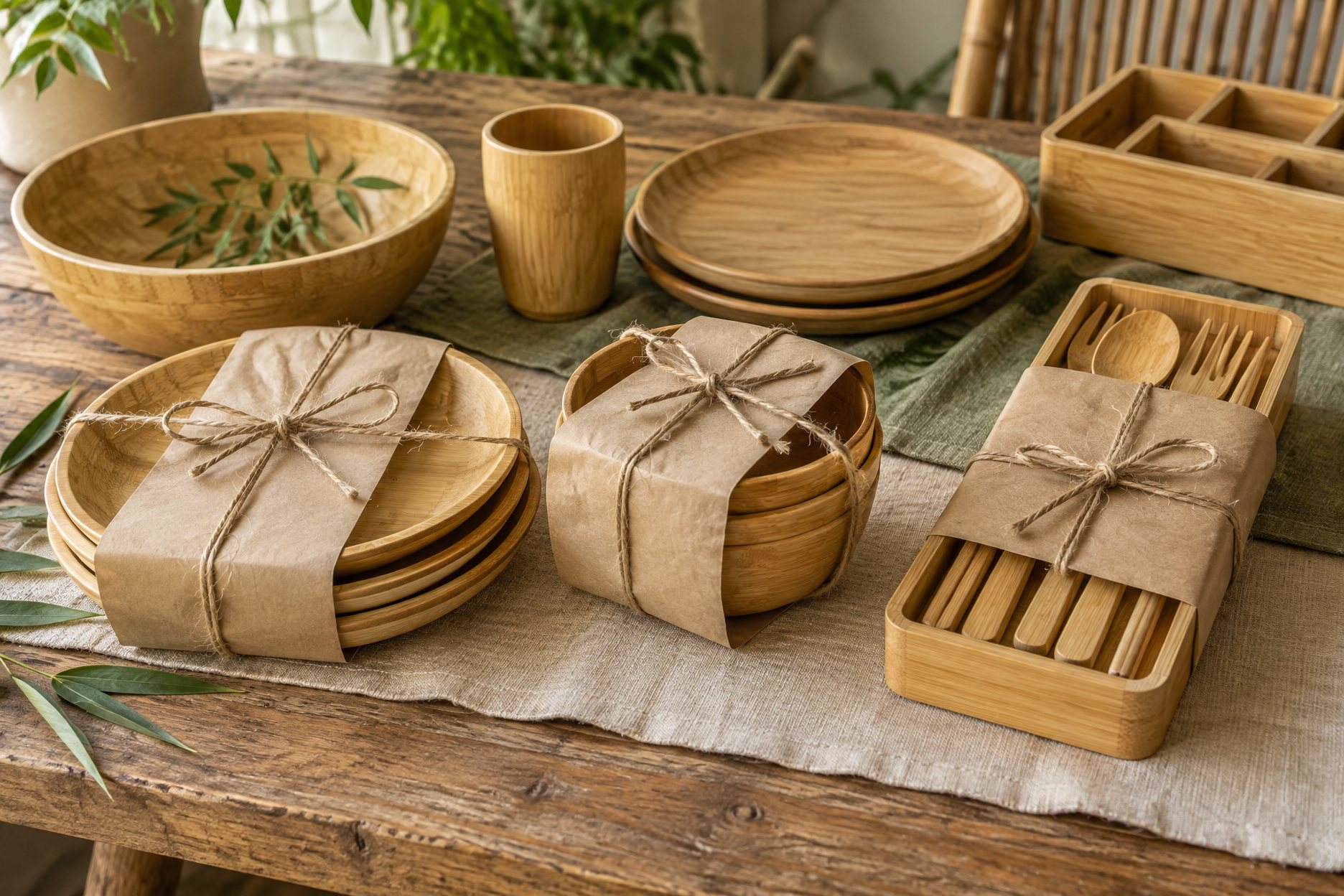
Case one: a foodservice distributor switches its disposables
A regional foodservice distributor serving independent restaurants decides to offer a disposable bamboo fork-and-spoon program alongside its existing plastic lines. The channel dictates the shape of the work: the distributor's restaurant customers order by the case, receive by the case, and their opening question is certification, because several of their municipalities have compost rules.
The program therefore starts with the claims list, not the item list. The distributor needs items whose existing certificate references verify on scheme lookups, so the desk matches stock forks and spoons that already carry references rather than certifying a new shape, which would add a testing path and a season of delay. Case packs are specified next: fixed count per carton, carton marks matching the distributor's warehouse system, wrapped kit options quoted alongside for accounts that want them. Species and harvest-country data are fixed in the program file for the Lacey Act declaration the distributor's broker will file. Samples ship within days because the items are stock, the golden sample is fixed, bulk runs inside the typical 30 to 45 day reference window, and inspection covers count verification on every case-pack spec. The case packs guide and the disposable cutlery guide carry the item-level detail, and the compostable line page shows the certificate logic this case leans on.
Case two: an eco brand launches a durable cutlery set
A young eco brand wants a reusable bamboo cutlery set in a travel pouch as its first hard product, to sit beside its existing consumables. Here the packaging layer carries the brand, so the program runs through the private label sequence: artwork for the sleeve and care card, an engraving proof for the small mark on each handle, and print proofs approved in writing before anything cuts.
The material conversation comes first. The set is specified as whole bamboo, shaped rather than laminated, with a food-contact oil finish named on the spec sheet and the workshop's documentation attached. The care card is written to match the spec, hand wash and dry, re-oil occasionally, because a card promising more than the spec would create a claim problem the brand would own. Kids' versions are deferred: a set marketed to children carries CPSIA duties, and the brand launches adult-only first, per the kids' tableware guide timing advice. Stock samples arrive within days; the branded sample round sits inside the typical 7 to 15 working-day reference window; the golden sample fixes object and packaging together. When the brand later adds a second pouch color, it runs as a change note against the same golden sample discipline rather than a new program, which is the quiet payoff of building the file properly. Durable ware reference ranges put the opening order at 500 to 1,000 pieces per style, confirmed in writing. The durable line page and the cutlery sets guide detail this route.
Case three: a wedding supplier builds disposable dinnerware kits
A wedding and event supplier wants bundled kits, a bamboo plate paired with a wrapped cutlery-and-napkin set, sold per guest to planners. The buying logic differs from the distributor case: quantities per event are smaller, presentation is the product, and certification demands vary by the municipality each venue sits in.
The kit is specified as a bill of materials: plate diameter options, cutlery set composition, napkin spec, wrap method, count per case for storage. The desk quotes plates and cutlery as separate lines from the disposable dinnerware and cutlery stock, then consolidates the shipment, since the belts overlap and mixed lines can share containers. Two certificate paths are quoted in parallel: items whose existing references cover the venues that ask, and the honest made-of-bamboo language for venues that do not. Bulk runs inside the typical reference window after golden-sample approval, and inspection verifies kit counts, because a short kit is the one failure a wedding planner will not forgive. Demand also concentrated hard into wedding season, which made the reorder calendar, not the MOQ, the binding constraint; the program file therefore dated the ordering cut-off before the season, not after the first sell-through. The wedding and events guide and the takeout programs guide cover adjacent channels.
What the three cases share
Same spine, different emphasis. Each program fixed its claims and papers before artwork or orders; each started from stock shapes and added customization only where the channel paid for it; each lived on the same published sequence, brief to quotation to samples to golden sample to bulk to reports, with figures confirmed in writing per program. The differences were emphasis: the distributor optimized for case math and certificates, the brand for finish papers and packaging claims, the wedding supplier for kit composition and consolidation. One hybrid is worth naming: case-pack discipline from the distributor program combined with the packaging layer from the brand program is effectively a private-label foodservice line, and it runs on the same spine with both emphases in one file. Assortment planners running more than one of these at once will find the combinations sketched in the assortment planning guide.
Yours will not match any of the three exactly, and that is the point of a desk rather than a catalog. Send your brief with the channel, the season date and the claims the packaging must make; the reply maps your version of the spine, in writing.