
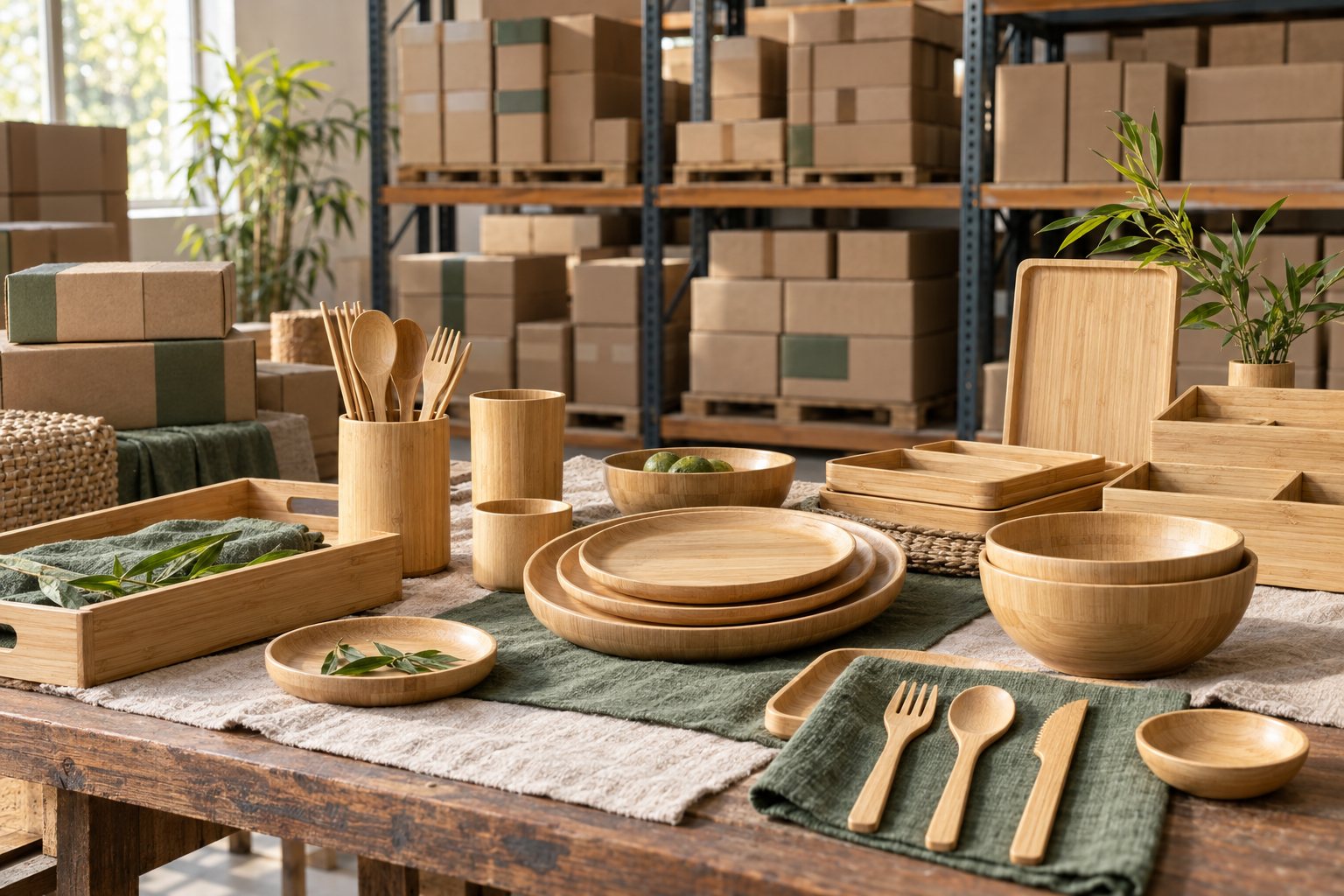
Case packs and cartons: two buying formats
The desk runs two routes, and wholesale buying splits along the same seam. Compostable disposables move as case packs: counted, wrapped units designed for foodservice shelves, event warehouses and takeout counters, where the case is the unit of truth. Durable bamboo ware moves as cartons: nested or retail-boxed pieces that protect finish and arrive shelf-ready, where the style and the box matter as much as the count. Mixed containers are normal. Mixed planning logic is not, and most wholesale friction we see starts with a buyer applying one format's rules to the other route.
| Format | Route | What arrives | Reorder logic |
|---|---|---|---|
| Case packs | Compostable disposables | Counted units per case, ready for service | Forecast by season, events and menu cycles |
| Cartons | Durable bamboo ware | Nested or retail-boxed pieces | Reorder on stock cover and gifting seasons |
The formats also explain the MOQ logic. Disposable items are typically quoted from about 1,000 pieces per item, often packed per case, because the case is how the customer consumes them. Durable styles typically run 500-1,000 pieces per style, because each style is a shelf decision. Both figures are industry reference ranges, confirmed in writing for each program; the planning versions live on the MOQ and lead time page.
Assortment by channel
Eco brands usually open with a durable retail line and add selected disposables where the story needs a certified-route item, with compostability claims backed by certificate references you can verify on the scheme's public lookup. Foodservice distributors buy the other way: case packs of cutlery, plates and kits, with disposables in bulk as the core and few durable pieces. Event and wedding suppliers lean on kits and platters with a seasonal spike. Boutiques carry serveware, gift sets and organizers. Corporate gift buyers want boxed sets with an engraving surface and an annual rhythm. The catalog behind all of it is mapped on the bamboo products overview, and the two routes are described on the compostable disposables route and the durable ware route pages.
The point of channel thinking is not taxonomy; it is cash. Assortments that match how a channel consumes product reorder on rhythm, and assortments that fight the channel sit in cartons until they are discounted.
An illustrative composition, not a prescription: a pouch cutlery set as the opening piece, one dinnerware anchor, a tray for the gifting season, and a case-packed kit only where the brand's channels actually consume disposables. Program cases like this are illustrative; real assortments start from the channel's buying rhythm and the buyer's stock cover, and the desk builds the list from there rather than from a template.
Why buyers route programs through a desk
A sourcing desk sits between the buyer and a network of partner workshops, and the job is narrower than a factory's and wider than a catalog's: match the brief to workshops that actually run the lines, check samples against the spec sheet, and keep capability claims attached to workshop profiles rather than to sales copy. Buyers keep one specification language across both routes, and the desk keeps the paperwork moving with the production calendar instead of behind it. That is the whole proposition, and it is why programs that span disposables and durable ware sit naturally on one desk.
Reorders and the calendar
Wholesale in bamboo is a calendar business dressed as a product business. Samples set the pace: stock samples typically ship within days, custom samples in about 7-15 working days, and bulk production typically takes 30-45 days after sample approval, all confirmed in writing per program. A retailer selling gift sets in November is really making a decision in spring, and a caterer booking a June wedding season is really ordering in winter. The buyer note on reorder planning lays out the seasons, events and production slots, and the desk holds reorder windows for established programs so the second order is a formality rather than a scramble.
Established programs also freeze artwork and spec sheets with version dates, so a reorder skips sampling entirely when nothing changed. That single habit is what turns a second order from a project into a purchase order, and it costs nothing but the discipline to date every approved file.
Retail packaging on wholesale terms
Wholesale does not mean plain. Bands, sleeves, printed boxes, care cards and insert cards are quoted with production, so the goods arrive ready for a shelf rather than ready for a repack. For durable ware, the box and the care card are part of the product story, and the print runs against the same artwork discipline as engraving. The packaging options, artwork formats and print methods are set out on the private label page, and they apply to wholesale programs and branded lines alike.
Terms in writing
Everything commercial about a program lives on the written quotation: the MOQ, the lead time, the price, the packaging and the certification needs, quoted per program because route, item, size, branding and paperwork all move the number. Claims are handled the same way: compostability statements follow certificate references that can be verified on the certifier's lookup, and the references are written into the program file. For bamboo entries into the United States, the desk supplies the species, origin and quantity data for the Lacey Act declaration; the importer of record files it and confirms current requirements with a customs broker. The paperwork map sits on the compliance and certifications page, and no buyer should take a claim on faith from any supplier, including this one.
How the desk runs a wholesale program
- Brief. Channel, product list, quantity ranges and any claims the packaging must carry.
- Route and assortment. Case packs, cartons or both, with reference MOQs per item or style.
- Samples and spec sheets. One per item, with finish, branding, packing and papers named.
- Production and papers. Bulk run, certificate references attached, declaration data prepared for the broker.
If your program spans both routes, that is the desk's normal day rather than an exception. Send the brief with your channel and quantity range, and the reply will name the format, the reference ranges and the open questions in writing, ready for you to decide rather than decipher.